
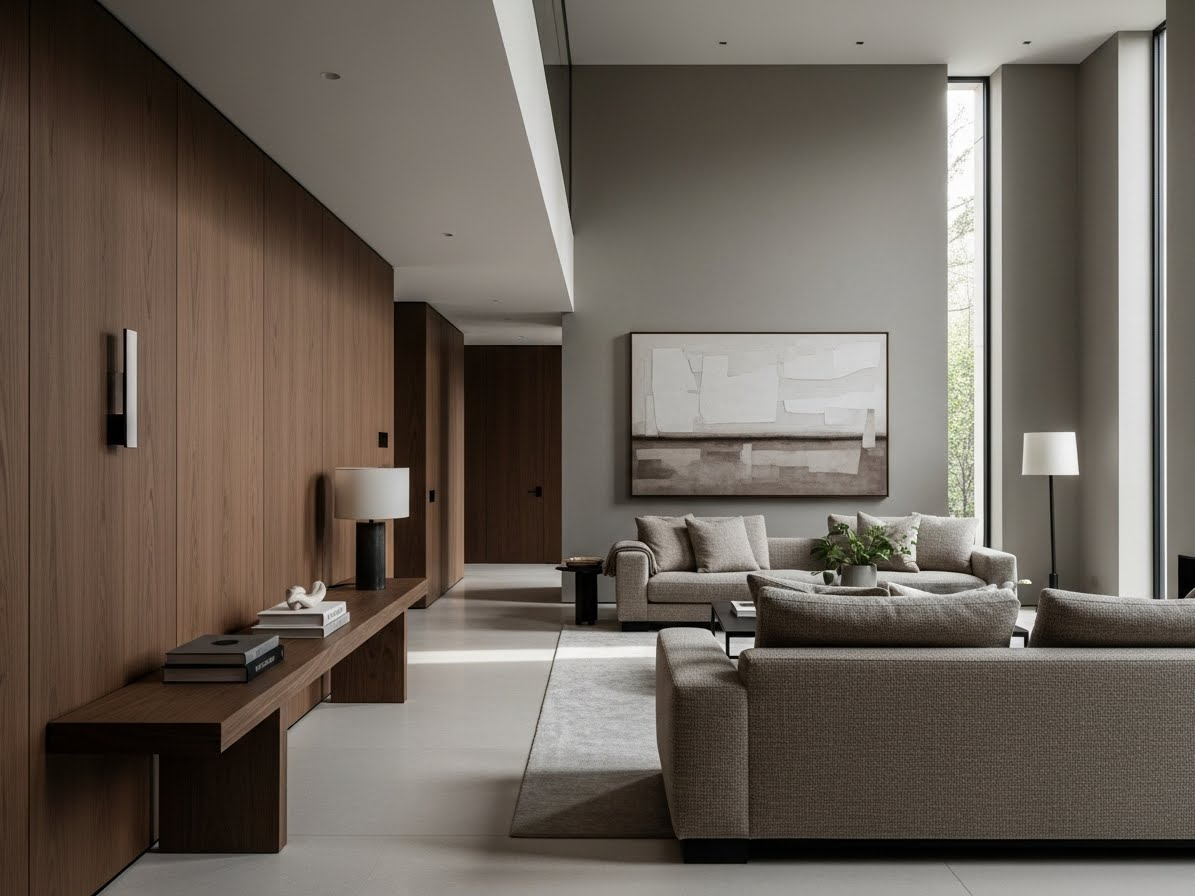
Interior Design: role, skills and how they transform a space
The profession of interior design is often mistakenly reduced to a matter of aesthetics or decoration. In reality, it is a comprehensive discipline at the intersection of architecture, design and use, whose main objective is to improve quality of life through space.
Understanding the role of the interior architect, their skills and methodology helps to fully grasp the real impact of their work, far beyond the visual appearance of a place.
What is an interior design?
An interior architect is a professional specialized in the design, transformation and optimization of interior spaces. Their work is based on a global reading of the existing space, its technical constraints and its real uses.
It is not simply about “making a space look beautiful”, but about making it coherent, functional and durable. The interior architect analyzes how a space is lived in, circulated and perceived, and then translates these observations into concrete spatial solutions.
Their work applies to both residential and professional environments, always guided by use, proportion and technical precision.
Interior design, architect and decorator: what are the differences?
Confusion between these professions is common, yet their scopes of work are clearly distinct.
The decorator mainly focuses on the visual aspect: colors, furniture, accessories and atmosphere. Their work takes place within an already defined space.
The interior architect works upstream. They rethink the organization of volumes, circulation, light and functions. Aesthetic decisions are the result of structural work.
The architect works on the building itself and its structure (load-bearing elements, façades, permits), with a broader but different field of action.
The interior architect therefore occupies a central position, connecting architectural logic with the daily experience of occupants.
The role of the interior design in a project

The role of the interior architect can be summarized in one essential mission: transforming a space so that it functions better, in a fluid, intuitive and coherent way.
In practical terms, this involves:
Identifying existing dysfunctions (inefficient circulation, lack of light, poorly used surfaces).
Clarifying the real needs of occupants, often different from their initial requests.
Designing a logical spatial organization adapted to actual uses.
Translating this vision into coherent technical, aesthetic and functional choices.
Supporting the execution to ensure the project remains faithful to the original intent through to delivery.
The essential skills of an interior architect
The profession of interior architect is based on a subtle balance between technical rigor and spatial sensitivity.
1. Analysis of uses and lifestyle
Before any design work begins, the interior architect observes how a space is used, at what times, by whom and under which conditions. This phase makes it possible to design a truly bespoke project.
2. Layout and circulation design
The distribution of rooms, hierarchy of functions and fluidity of movement are fundamental. A well-designed layout improves spatial clarity and everyday comfort.
3. Mastery of light
Light, both natural and artificial, directly influences the perception of volumes, atmosphere and well-being. The interior architect uses it as a true design tool.
4. Selection of materials and textures
Each material has visual, tactile and emotional properties. Their selection is not based solely on aesthetics, but also on usage requirements and durability.
5. Project coordination and management
From the design phase to execution, the interior architect ensures overall coherence, anticipates constraints and coordinates the different stages of the project.
How an interior design concretely transforms a space
The transformation carried out by an interior architect is not always immediately spectacular, but it is deeply structural.
A space transformed by a professional is characterized by:
Fluid and intuitive circulation.
Coherence between volumes, light and materials.
A sense of balance and calm.
Precise adaptation to real uses.
This in-depth work helps avoid common mistakes resulting from isolated or purely decorative decisions.
Methodology: a key factor for success
The difference between a successful project and a space that is simply “decorated” often lies in methodology.
An interior architect structures their work into clear stages:
Diagnosis of the existing space.
Definition of a spatial concept.
Technical development and material selection.
Coordination of implementation.
Delivery and final adjustments.
This methodical approach ensures a controlled, coherent result that remains faithful to the original intent.
Why hire an interior design?
Hiring an interior architect means choosing a rational and sensitive approach to space. It means accepting that every decision has an impact, and that this impact should be carefully considered from the outset.
A well-designed space supports daily routines, improves comfort, reduces sources of stress and sustainably enhances the value of a place. The work of an interior architect goes beyond a one-off project: it transforms the way space is experienced in the long term.
Frequently Asked Questions about Interior Architects
What is the exact definition of an interior design?
An interior design is a professional specialized in the design and optimization of interior spaces. They work on the organization of volumes, circulation, light, materials and uses to create functional, coherent spaces adapted to everyday life.
What is the main role of an interior architect in a project?
The main role of the interior architect is to translate needs and constraints into concrete spatial solutions. They analyze the existing space, design a global project and support its implementation to ensure a result faithful to the original intention, both functionally and aesthetically.
Can an interior architect modify the structure of a space?
An interior architect can rethink interior organization, non-load-bearing partitions and circulation. However, major structural modifications fall within the scope of the building architect. The two professions can work in close collaboration.
Why hire an interior design instead of managing the project alone?
Hiring an interior architect helps avoid design errors, aesthetic inconsistencies and inefficient long-term choices. Their expertise provides a global vision, a clear methodology and better overall project control, both functionally and qualitatively.
When should you involve an interior design?
Ideally, the interior architect should be involved from the very beginning of the project. The earlier they are involved, the more they can influence structuring decisions: space organization, light, materials and overall coherence. Late involvement often limits the transformation potential.
What types of spaces can be designed by an interior design?
An interior architect can work on residential spaces (apartments, houses) as well as professional environments (offices, retail spaces, restaurants). In all cases, their approach is guided by use, functionality and spatial experience.