
Interior Design Trends 2026 | Materials, Color & Form
Interior design in 2026 moves toward a more sensory, grounded and intentional approach to space. Trends are no longer purely aesthetic statements. They reflect how we live, feel and interact with our environments.
A new perspective on interior design in 2026
Interior design in 2026 moves toward a more sensory, grounded and intentional approach to space. Trends are no longer purely aesthetic statements. They reflect how we live, feel and interact with our environments.
Global insights from Archiproducts reveal a clear direction: tactile surfaces, expressive materials, sculptural forms and a more conscious approach to composition and identity. Interiors become personal landscapes rather than decorative displays.
Here are the defining directions shaping interior design in 2026.
1. The return to materiality: warmth, texture and authenticity
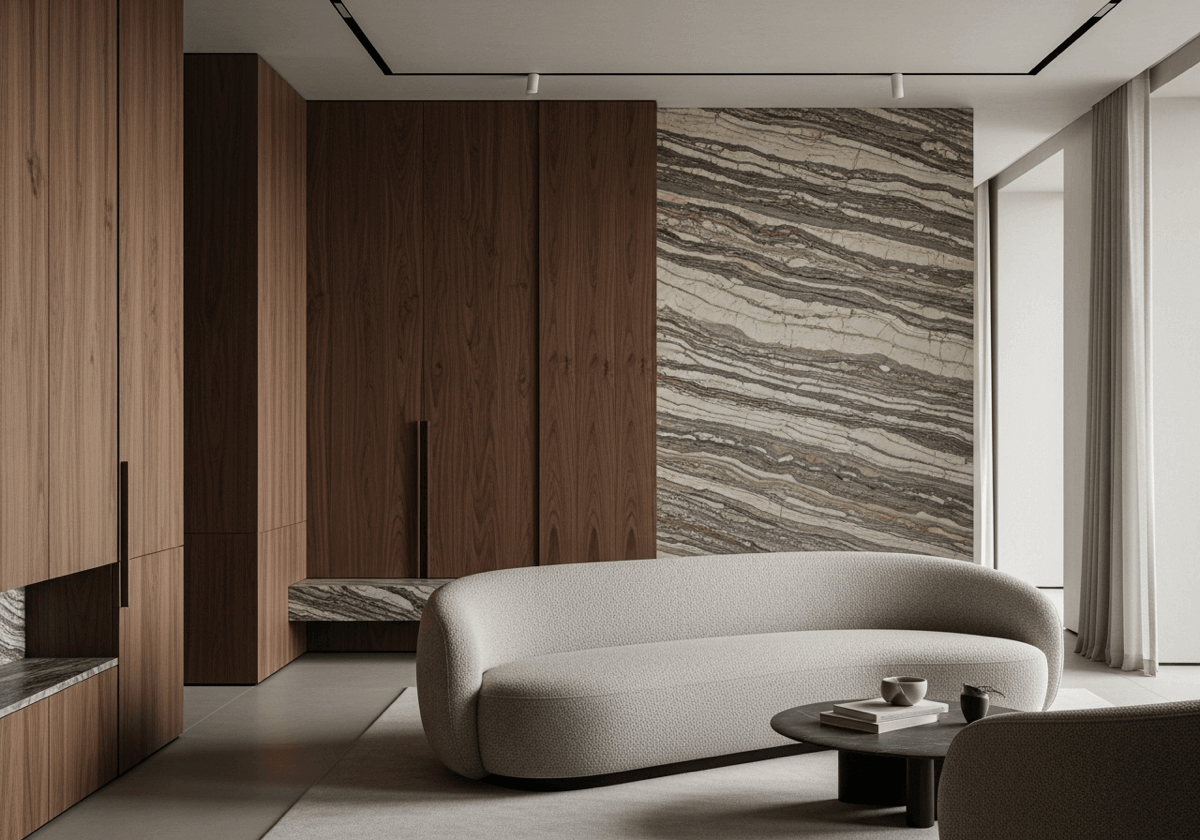
Interiors are shifting away from overly polished surfaces and toward richer, more tactile experiences. Wood and stone reclaim a central role, chosen for their ability to bring depth, warmth and visual stability.
Warm-toned woods such as walnut and cherry stand out for their expressive grains and soft finishes. They create a sense of intimacy and rhythm, connecting different areas of the home with quiet continuity.
Stone appears in its most authentic form. Visible veins, subtle gradients and irregular textures reinforce its sculptural presence. Whether raw or softly polished, it anchors the space and introduces refined sophistication without excess.
Glass and metal adopt a more nuanced expression. Smoked or fluted glass bends light, adding softness and depth. Brushed steel, patinated brass and recycled alloys introduce a controlled luminosity that supports a more balanced and responsible material palette.
2. Color as an emotional tool

In 2026, color becomes a strategic design element. It shapes mood, perception and spatial rhythm.
A natural balance between blue and earthy tones
Blue finds grounding when paired with ochre, terracotta, sand and clay. This combination creates interiors that feel authentic and welcoming, enhanced by matte finishes and rounded forms.
Calm depth with quiet neutrals
When combined with warm whites, soft greys and muted beiges, blue takes on a contemplative quality. These palettes foster tranquility, reflection and elegance, supported by diffused light and textured natural materials.
Bold contrasts and creative energy
Blue reveals its dynamic side when paired with vibrant tones such as mustard yellow, emerald green or deep red. These contrasts introduce visual rhythm and a contemporary edge, where color becomes a narrative element within the space.
A cloudy white for an airy dimension
The white of 2026 is soft, diffused and atmospheric. It enhances light, expands perception and highlights form and shadow. Used alongside translucent panels or reflective surfaces, it creates luminous and serene interiors.
3. Shape as spatial language

Form plays a structural role in defining 2026 interiors. Volumes become more architectural, yet maintain visual softness.
Solid volumes and sculptural impact
Generous seating, monolithic tables and organic lighting pieces define spatial hierarchy. These elements guide circulation and clearly articulate functional zones while preserving compositional balance.
Pure geometries and soft lines
Circles, arches and ellipses reintroduce fluidity into interiors. Curved transitions replace rigid lines, creating visual continuity and intuitive movement. Rounded edges and sculpted profiles contribute to a harmonious and inviting atmosphere.
4. Two defining aesthetics: soft brutalism and warm minimalism
The quiet power of soft brutalism
Soft brutalism combines structural weight with warmth. Concrete planes, mineral textures and strong geometries are softened by filtered light, rounded details and natural wood accents. The result is a grounded, contemporary interior that feels protective rather than austere.
Warm minimalism
Minimalism in 2026 is not cold or empty. Neutral palettes, soft fabrics and warm woods define interiors that feel composed and welcoming. Each element serves a purpose. Proportions are carefully balanced. Details are subtle yet precise. This approach supports everyday life with calm clarity.
5. Collectible design and timeless identity
Another key direction is the growing presence of collectible design and iconic reissues. Classic pieces are valued not only for their aesthetic qualities but for the cultural narratives they carry.
Incorporating design icons transforms interiors into curated spaces shaped by memory and authorship. The focus shifts from trend-driven consumption to meaningful, lasting choices.
Conclusion
Interior design trends in 2026 point toward more conscious, tactile and emotionally grounded spaces. Material authenticity, expressive color, sculptural form and refined simplicity define a new way of inhabiting interiors.
At RK Interiors, trends are never applied superficially. They are interpreted through lifestyle, spatial context and individual identity to create interiors that feel personal, balanced and enduring.
If you are considering a renovation or a bespoke interior project, we invite you to explore how these trends can be thoughtfully integrated into your space.